Non-Woven vs Woven Disposable Products: Understanding the Difference
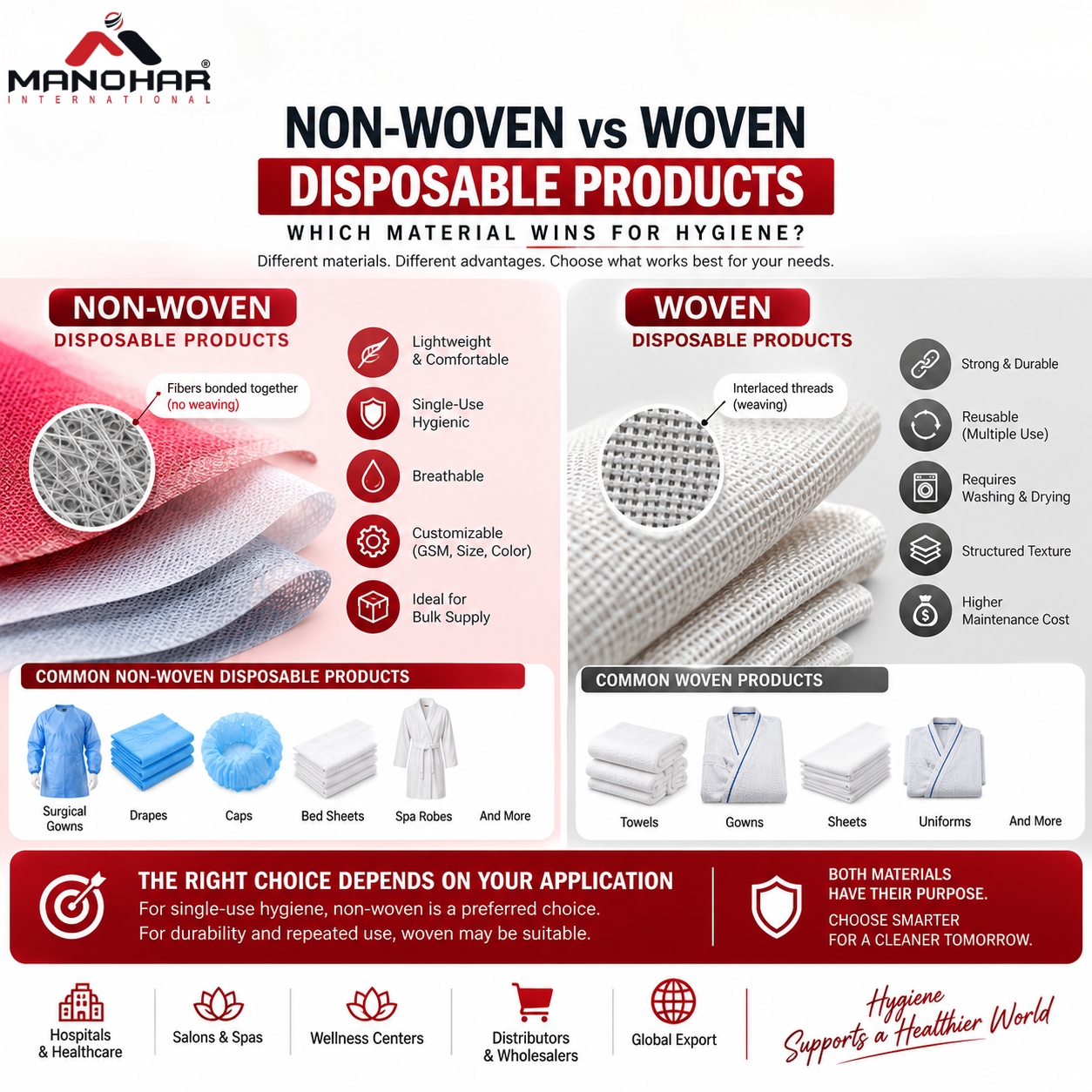
When hospitals, salons, spas, wellness centers, and professional businesses choose Disposable Hygiene Products, material selection matters. Two commonly discussed options are non-woven and woven materials, but they differ significantly in construction, application, convenience, and hygiene management.
For businesses sourcing products in bulk, understanding Non-Woven vs Woven Disposable Products can help them choose the right option for their industry, budget, and hygiene requirements.
What Are Non-Woven Disposable Products?
Non-Woven Disposable Products Manufacturer are made from fibers bonded together using mechanical, thermal, or chemical processes rather than traditional weaving.
Common materials include PP non-woven, SMS, SMMS, spunlace, and other engineered fabrics.
Non-woven materials are widely used for:
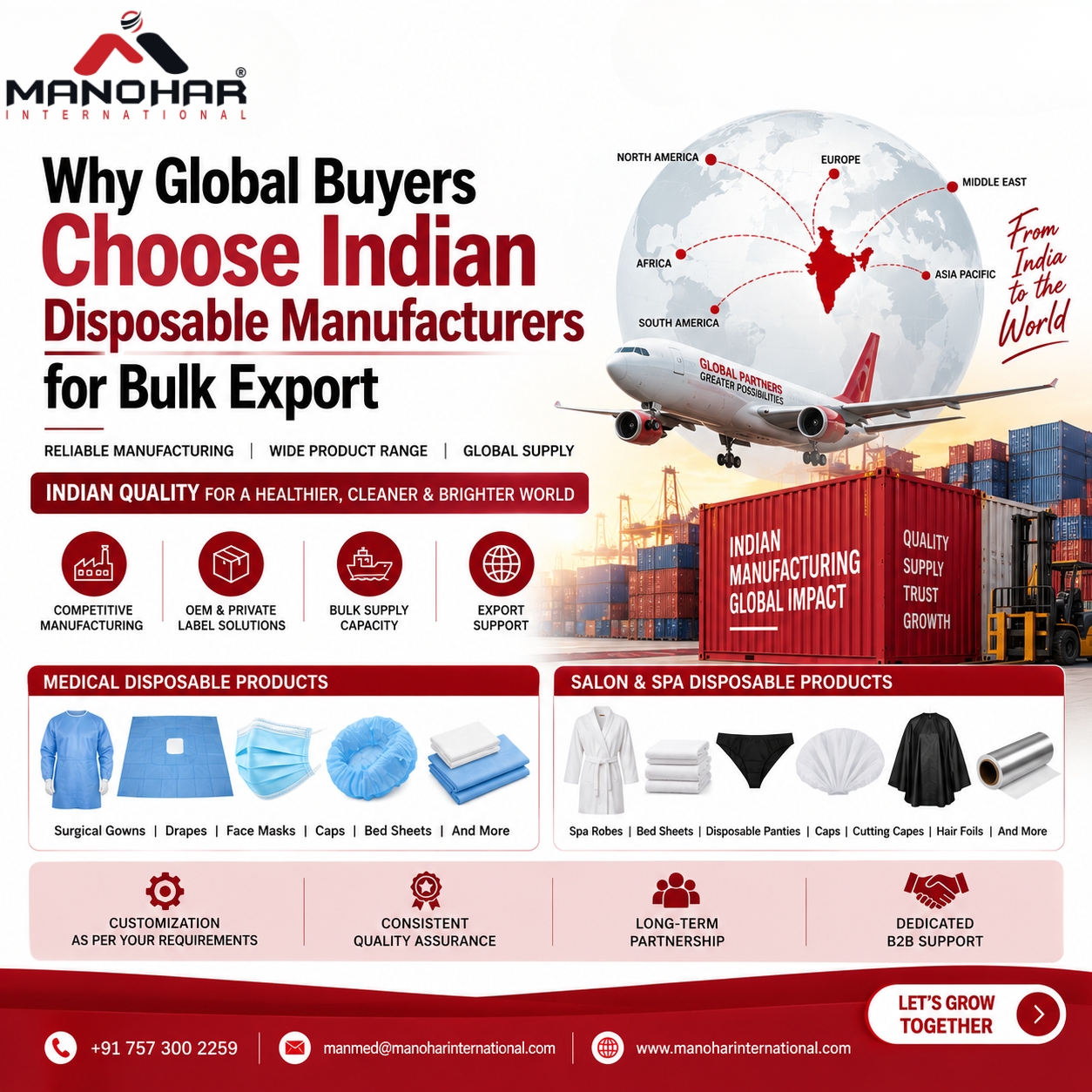
- Surgical gowns
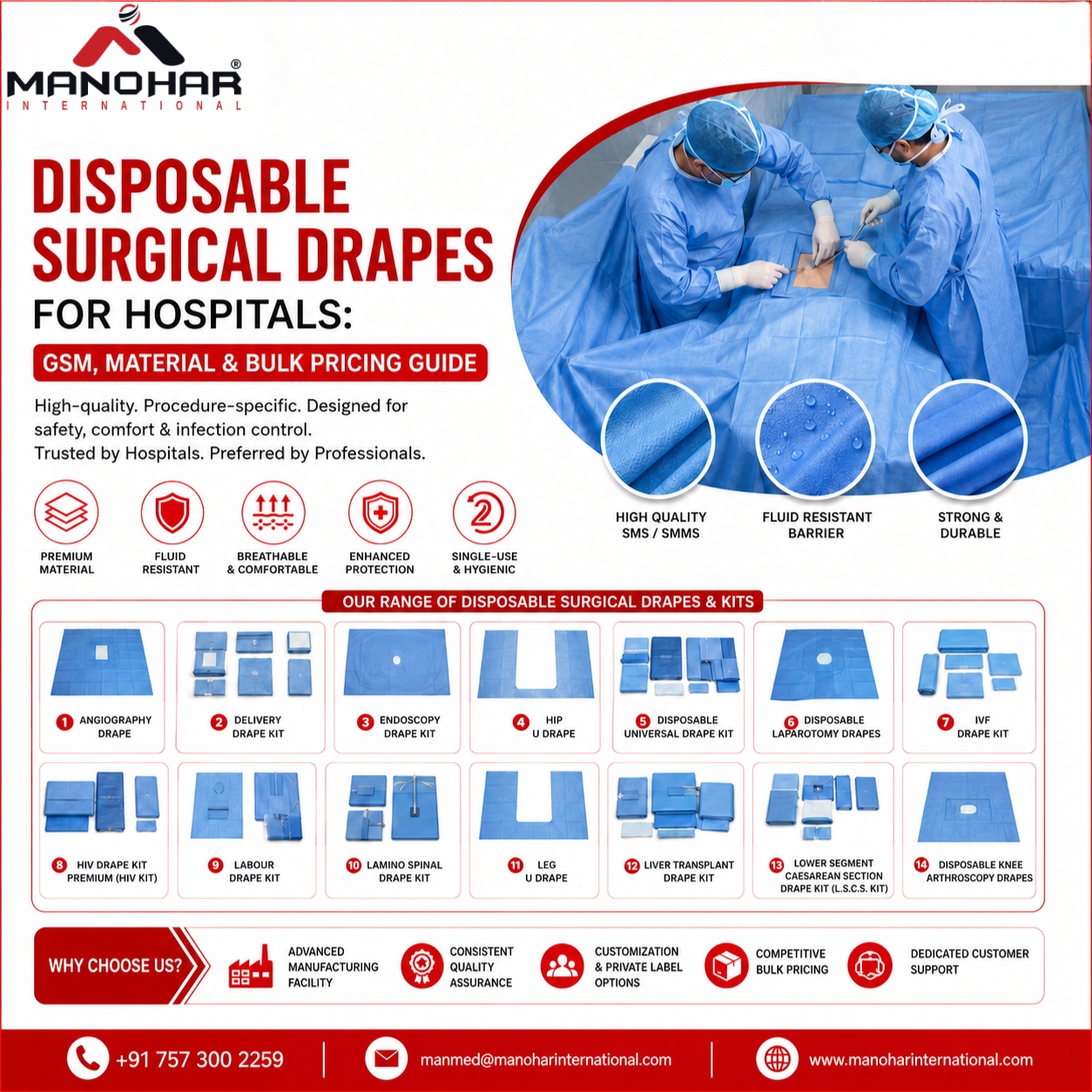
- Surgical drapes
- Bouffant caps
- Shoe covers
- Disposable bed sheets
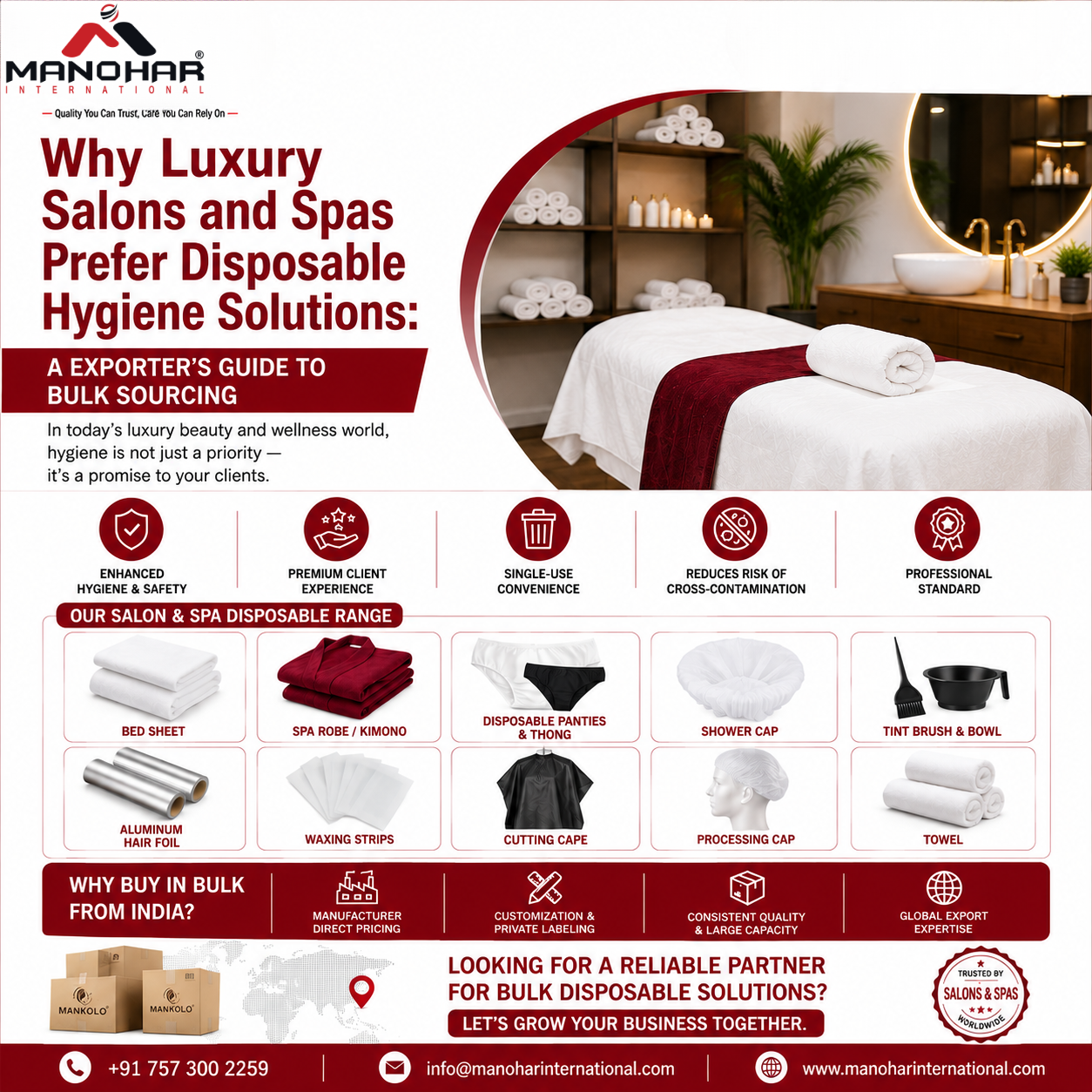
- Spa robes
- Disposable underwear
- Cutting capes
- Patient gowns
- Salon and spa hygiene products
Their lightweight structure and suitability for single-use applications make them popular in healthcare, beauty, wellness, and hospitality sectors.
What Are Woven Products?
Woven Products are made by interlacing threads in a structured pattern. Cotton and polyester fabrics are common examples.
Woven textiles are generally durable and may be designed for repeated use. However, reusable woven products typically require washing, drying, disinfection, and proper storage after every use.
This adds ongoing laundry and handling requirements for hospitals, spas, and salons.
Which Material Is Better for Hygiene?
For many single-use applications, Non-Woven Disposable Products offer a practical hygiene advantage because a fresh product can be used for each patient or client and then discarded according to appropriate waste-management procedures.
This helps businesses reduce reliance on laundering and reprocessing reusable fabrics.
However, hygiene performance should not be judged by material name alone. Product design, material construction, barrier requirements, handling, storage, intended use, and proper disposal are also important.
In healthcare, the correct product should always be selected according to the clinical procedure and applicable standards.
Benefits of Non-Woven Disposable Products
Single-Use Convenience
Non-woven products are commonly designed for one-time use, simplifying preparation between patients or clients.
Lightweight & Comfortable
Many non-woven materials are lightweight and can be suitable for gowns, caps, sheets, and professional-use garments.
Reduced Laundry Requirements
Hospitals, salons, and spas can reduce the operational burden associated with washing, drying, ironing, and storing reusable textile products.
Customizable Material Options
A Non-Woven Products Manufacturer in India may offer different materials, GSM, dimensions, colors, and packaging options depending on buyer requirements.
Suitable for Bulk Procurement
Non-woven products can be manufactured at scale, making them suitable for hospitals, distributors, salon chains, spa businesses, wholesalers, and international importers.
Non-Woven Disposable Products for Healthcare
The healthcare sector uses Medical Disposable Products extensively for infection-control workflows and procedural preparation.
Typical products include surgical gowns, isolation gowns, surgical drapes, caps, shoe covers, patient gowns, bed sheets, and procedure kits.
Materials such as SMS and SMMS may be selected according to the intended barrier and performance requirements.
Non-Woven Products for Salons & Spas
Professional beauty businesses also use disposable products to improve operational hygiene.
Common Salon and Spa Disposable Products include spa robes, bed sheets, towels, disposable panties, thongs, processing caps, headrest covers, cutting capes, and aprons.
Using a fresh product for every client can help create a cleaner and more professional experience.
Which Material Should Bulk Buyers Choose?
Choose non-woven disposable products when your priority is single-use convenience, reduced laundry, customization, and scalable procurement.
Choose woven products when durability and repeated use are more important and your organization has an effective laundering and reprocessing system.
For many hospitals, salons, and spas, the decision often depends on the specific application rather than choosing one material for every product.
Conclusion
In the debate over Non-Woven vs Woven Disposable Products, non-woven materials often stand out for single-use hygiene, convenience, lightweight construction, and bulk manufacturing flexibility.
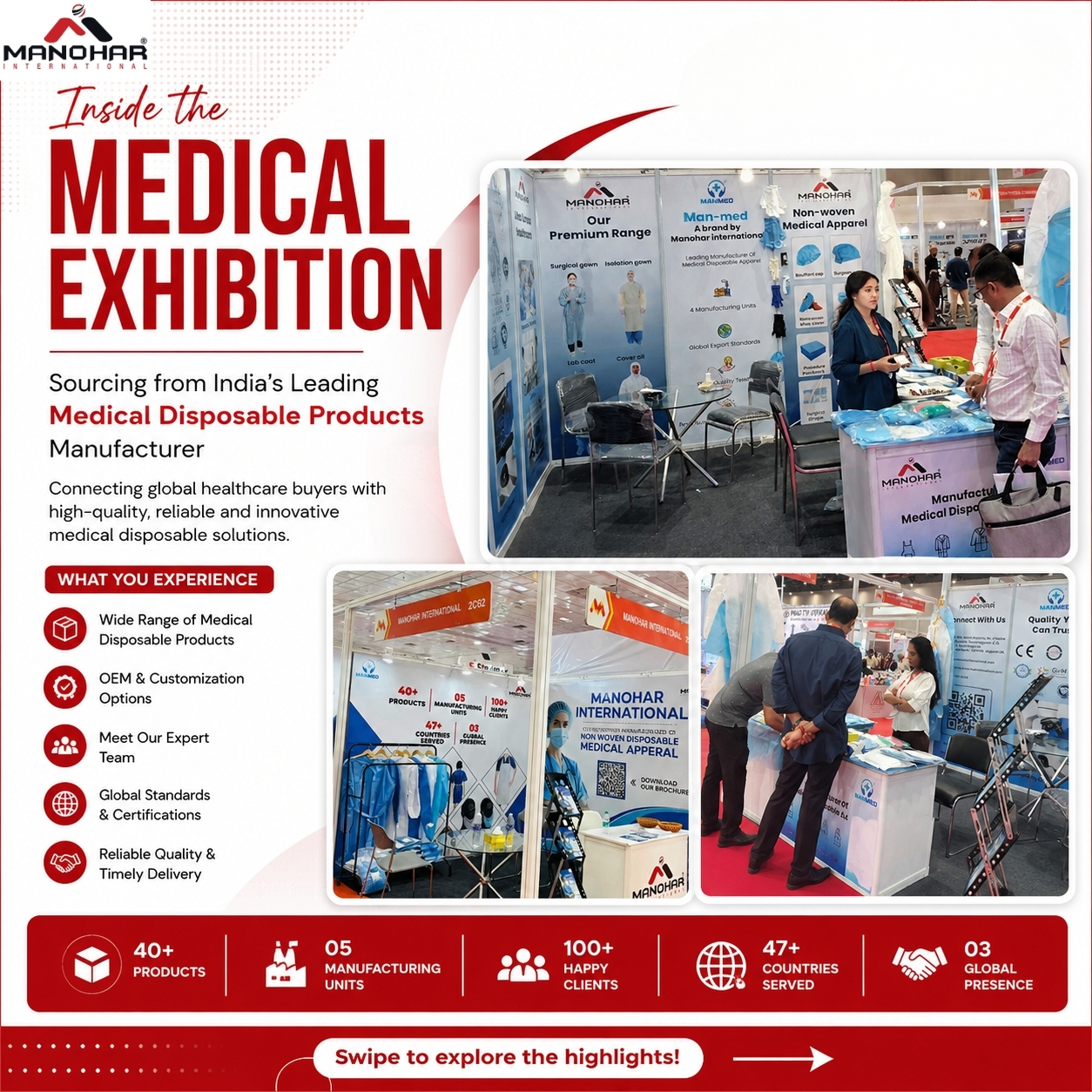
For B2B buyers sourcing from India, working with a reliable Non-Woven Disposable Products Manufacturer can provide access to customized materials, sizes, packaging, OEM manufacturing, private labeling, and large-volume supply.
FAQs
1. Are non-woven products better for hygiene?
For many single-use applications, they can simplify hygiene management by providing a fresh product for each use.
2. What materials are commonly used in non-woven disposables?
PP non-woven, SMS, SMMS, and spunlace are commonly used depending on the application.
3. Are woven products reusable?
Many woven textile products are designed for repeated use and therefore require proper laundering and reprocessing.
4. Can non-woven disposable products be customized?
Yes. Manufacturers may offer customized GSM, sizes, colors, materials, packaging, and private labeling.
5. Who buys non-woven disposable products in bulk?
Hospitals, medical distributors, salons, spas, wellness centers, wholesalers, importers, and private-label brands commonly purchase them in bulk.